Workspaces are undergoing a significant transformation. Changes in work habits, the growing importance of employee wellbeing and the need for greater flexibility are redefining the way offices are designed and organised. Today, offices are no longer simply places where people carry out their daily tasks; they have become environments that encourage collaboration, creativity and productivity. In this context, office design plays an essential role in creating spaces that respond to the needs of both companies and their teams.
New ways of working, new spaces
The rise of hybrid working, flexible schedules and collaborative working methods has changed the way companies use their offices. Workspaces must now accommodate different activities throughout the day, from individual tasks requiring concentration to meetings, teamwork and informal conversations. This evolution calls for more versatile layouts, where different areas coexist and can adapt to changing requirements. Modern offices are therefore moving away from rigid configurations towards more open, flexible environments that make better use of available space and encourage interaction between employees.
Office design focused on people
Beyond functionality, the design of today’s offices increasingly focuses on people’s comfort and wellbeing. Natural light, acoustics, materials, colours and spatial organisation all influence how employees experience their working environment. Creating welcoming and comfortable spaces can contribute to a more positive atmosphere and improve everyday working experiences. Office design must therefore find a balance between corporate identity, aesthetic quality and practical requirements, ensuring that each area has a clear purpose while maintaining a coherent overall image.
The role of furniture in modern offices
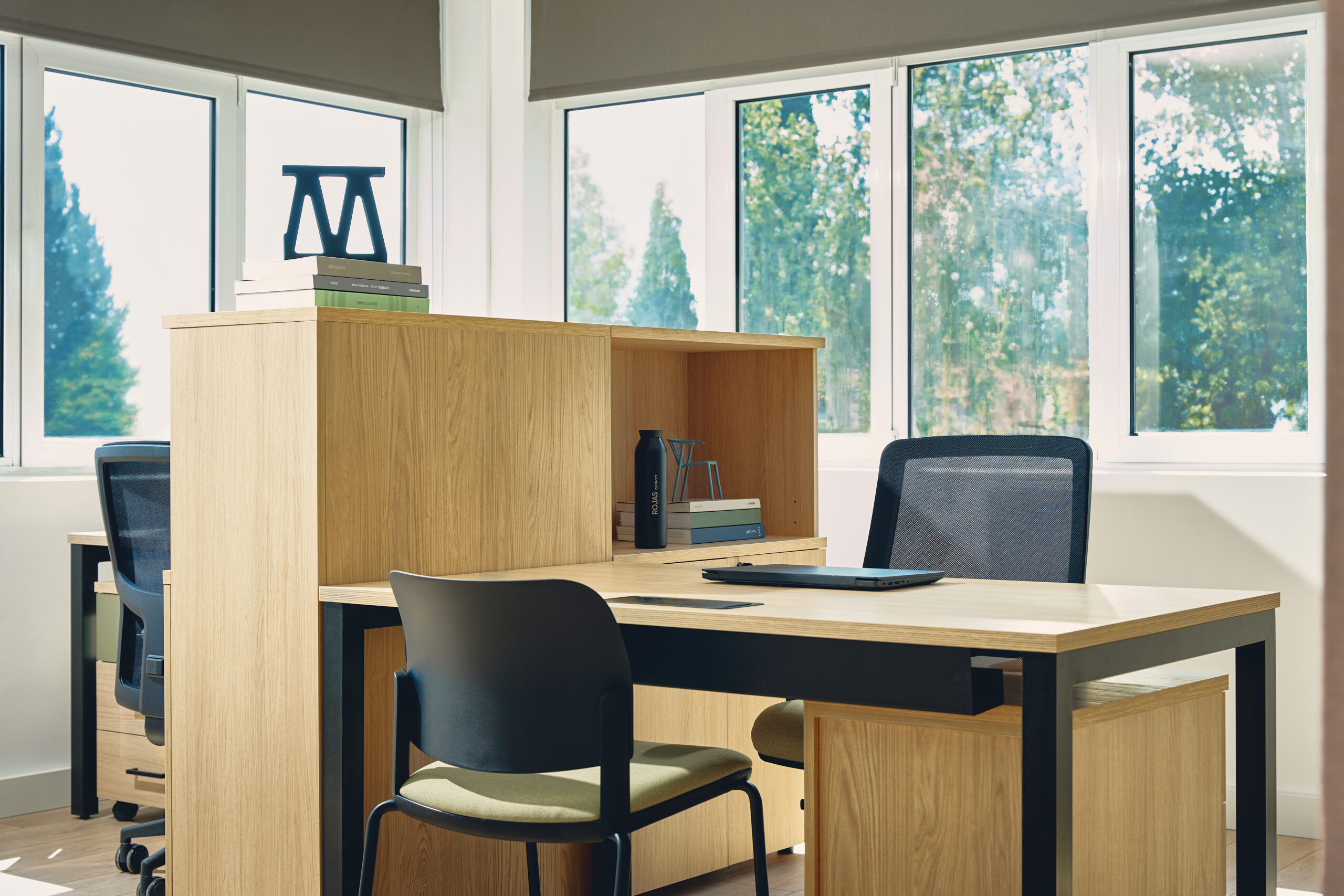
Office furniture is a key element in this transformation. Desks, chairs, storage systems, meeting tables and shared furniture must respond to new working habits while offering durability, comfort and flexibility. Modular solutions and adaptable furniture make it possible to reorganise spaces as companies evolve, without compromising functionality or design. For this reason, choosing the right office furniture is not simply a matter of aesthetics, but a strategic decision that influences how a workspace operates and develops over time.
At Rojas Contract, we understand furniture as an essential part of creating work environments that combine design and functionality. Through our experience in furniture manufacturing, in-house production and customised solutions, we develop proposals adapted to the characteristics of each project. Our approach allows us to combine standard products with specific solutions, responding to the needs of different spaces and the people who use them.
Designing offices for the future
The future of workspaces will continue to be shaped by flexibility, collaboration and the need to create environments that adapt to changing ways of working. Companies need offices that can evolve alongside their teams, support different activities and reflect their identity. This makes it increasingly important to work with furniture solutions that combine quality, durability and adaptability. At Rojas Contract, we believe that good office design starts with understanding how people use a space and transforming those needs into practical, long-lasting solutions. Because the offices of the future are not defined only by how they look, but by how well they respond to the people who work in them.